No More Gatekeepers: How Basement Producers Are Crashing EDM's Biggest Stages
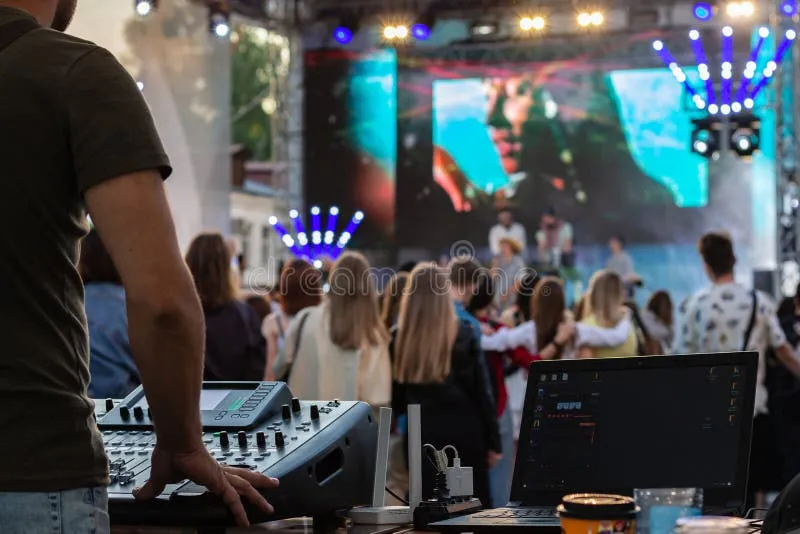
Photo: underground producer laptop DJ booth festival mainstage crowd electronic music, via thumbs.dreamstime.com
The Old Guard Is Out, and Nobody's Mourning It
For decades, breaking into the upper echelons of American EDM felt less like a meritocracy and more like a fraternity rush. You needed the right manager, the right label co-sign, the right handshake at the right after-party in Hollywood or Miami. Talent was almost secondary to access. The result? Mainstages that recycled the same dozen names while an entire generation of genuinely innovative producers ground away in obscurity, playing 2 AM slots to 200 people in buildings that probably shouldn't have had that many people inside them.
That era is collapsing in real time, and honestly? Good riddance.
The past three to four years have witnessed a genuine seismic shift in how underground producers — the ones who built their sound in cramped bedrooms, rented practice spaces, and sweaty basement parties — are suddenly commanding headlining slots at Electric Zoo in New York, Beyond Wonderland in Southern California, and even the massive Sahara tent at Coachella. What changed? A whole lot of things at once.
The Democratization of the Studio
Let's start with the obvious but genuinely transformative: production tools got cheap, accessible, and insanely powerful. A producer in Detroit or Austin or literally anywhere with a laptop and a decent pair of headphones can now build tracks that sonically compete with anything coming out of a major-label studio in Los Angeles. Ableton Live, FL Studio, and a handful of quality VST plugins represent maybe a few hundred bucks of investment — the cost of one night out in Vegas — and they've effectively leveled a playing field that was brutally tilted for generations.
"I made my first three EPs entirely on a cracked version of FL Studio in my college dorm," says one Chicago-based producer who recently played a 10,000-capacity stage at a Midwest summer festival after years of building a following through SoundCloud drops and local warehouse bookings. "Nobody handed me anything. I just kept making music until people couldn't ignore it anymore."
That story isn't unique — it's practically a template now. The underground has always had talent. What it lacked was infrastructure for that talent to reach audiences at scale. Social media closed that gap almost overnight.
TikTok, SoundCloud, and the Algorithm as A&R
Traditional A&R — the industry scouts who used to decide whose career got greenlit — have essentially been replaced by engagement metrics and viral moments. A hypnotic 60-second clip of an unreleased track can rack up millions of views before a label executive even opens their laptop in the morning. By the time the industry notices, the producer already has 50,000 followers, a booking agent sliding into their DMs, and a waitlist of promoters wanting them for their events.
SoundCloud remains the spiritual home of underground electronic music discovery in the US. Its culture of free releases, long-form mixes, and unfiltered community feedback created a proving ground where producers could develop their sound publicly without commercial pressure. Many of today's festival headliners credit years of SoundCloud drops — often given away for free — as the foundation of their fanbase.
TikTok added a different dimension: immediacy and cross-genre reach. A dark techno loop or a euphoric melodic house progression can go viral on TikTok and pull listeners who never would have found underground electronic music through traditional channels. Those listeners become festival ticket buyers. Those ticket buyers create demand. And demand, eventually, creates bookings.
The Underground Collective Model
One of the most compelling stories driving this shift isn't about individual producers — it's about collectives. Across cities like New York, Chicago, Los Angeles, Detroit, and Atlanta, underground production and DJ collectives have been operating as mutual support networks, sharing studio time, booking resources, social media strategy, and creative feedback. These crews function like indie labels without the predatory contracts.
Collectives such as these have demonstrated that the underground scene's communal ethos — the culture of sharing knowledge, lifting each other up, and prioritizing the music over the business — is actually a competitive advantage in the current industry landscape. Promoters and festival bookers increasingly seek out these groups because they come with built-in communities, proven track records of keeping dancefloors moving, and a credibility that manufactured pop-EDM acts simply can't replicate.
"There's a vibe check that happens when you book someone from the underground," explains a booking coordinator for a major multi-city festival circuit who asked to remain anonymous. "The crowd can feel whether someone actually lives this culture or whether they were assembled in a boardroom. That authenticity is becoming a premium commodity at the festival level."
What It Looks Like on the Ground
The practical reality of this transition is fascinating to watch. Producers who spent years playing illegal warehouse parties — navigating the logistics of secret locations, noise complaints, and venues with questionable structural integrity — now carry that rawness onto stages with full production rigs, lasers, and crowds measured in the tens of thousands.
That experience matters more than people realize. Running a set for 300 people in a warehouse where the sound system is held together with zip ties and good intentions teaches you something about reading a room, adapting in real time, and keeping energy alive through chaos that no amount of festival prep can fully replicate. Underground veterans arrive on big stages already battle-tested.
Beyond Wonderland attendees in recent years have noted a palpable difference in the energy when underground-rooted acts take the stage versus more polished commercial performers. There's an improvisational quality, a willingness to go darker or weirder or more euphoric than the safe middle ground — and festival crowds, increasingly savvy about electronic music culture, are responding to it.
The Road Ahead
None of this means the underground is disappearing into the mainstream. If anything, the scene's influence is flowing upward while the underground itself continues to evolve and push further into uncharted sonic territory. For every producer who graduates to festival mainstages, five more are starting their journey in a basement somewhere, building the next wave.
The gatekeepers didn't just lose their grip — they lost their relevance. And for anyone who's ever stood on a dark warehouse floor at 4 AM, feeling a kick drum in their chest and knowing they were part of something real, that feels like exactly the kind of ending this story deserved.
The underground built this. And now it's finally getting its flowers.