Built to Punish: How Underground Venues Engineer Sound Systems That Weed Out the Wrong Crowd
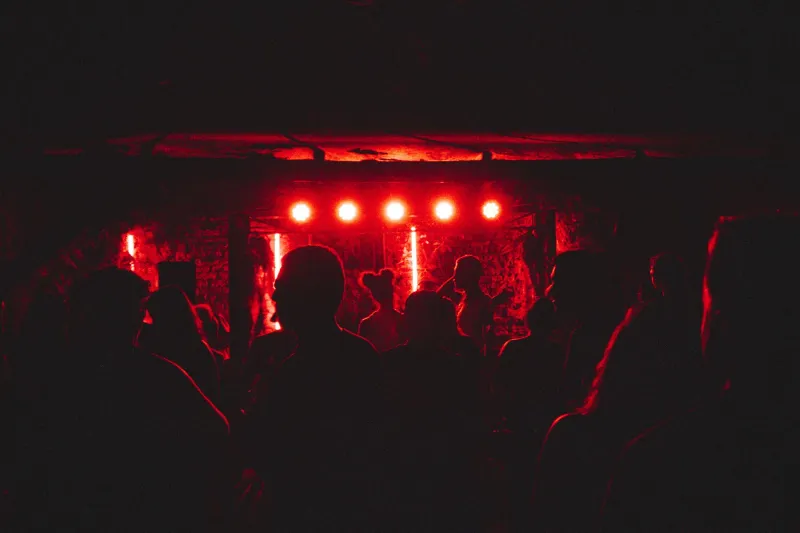
There's a moment every seasoned raver knows. You walk into a room, the kick drum hits your sternum before your ears even process it, the sub frequencies are rolling up through the concrete into your shoes, and something clicks. You're in the right place. The room is speaking your language.
Now flip that experience. You walk into a mainstream club — marble floors, Instagram lighting, a DJ booth that looks like a Tesla showroom — and the music is loud, sure, but it's sitting on top of you rather than moving through you. The bass is muddy. The highs are brittle. The whole thing feels like a playlist blasting through an expensive speaker that nobody ever properly tuned.
That gap isn't accidental. And in America's underground dance scene, more and more promoters and sound engineers are making it wider on purpose.
The Room Is the Instrument
Walk into a well-regarded underground venue — think a converted warehouse in Detroit's east side, a low-ceiling basement in Chicago's Pilsen neighborhood, or a repurposed industrial space somewhere in Brooklyn — and you'll notice the sound feels different before you can explain why. That's because the people who built those rooms thought about acoustics the way a musician thinks about an instrument.
It starts with the physical space. Concrete and brick walls, raw ceilings, unfinished floors — these materials aren't just aesthetic choices. They reflect sound differently than the foam-padded, acoustically "safe" interiors of corporate clubs. Underground venues often lean into parallel surfaces and irregular room shapes, which create complex sound reflections that make bass frequencies bloom and spread in ways that a perfectly treated room never quite replicates.
"A mainstream club is designed so the sound is predictable everywhere in the room," says one Chicago-based sound engineer who has worked with some of the Midwest's most respected underground promoters. "Underground spaces are designed so the sound is alive. It's not the same everywhere, and that's the point."
The Bass Trap Paradox
Here's where it gets counterintuitive. Bass traps — acoustic panels that absorb low-frequency energy — are standard in recording studios and high-end listening rooms. They tighten bass, reduce muddiness, and make sound more controlled. Many mainstream clubs invest heavily in them.
Underground venues? A lot of them strategically avoid over-treating their rooms. Not out of laziness or budget constraints, but because a certain amount of low-end buildup is the whole point. When a kick drum fires in an untreated room with concrete walls and a low ceiling, the bass doesn't just hit you — it accumulates. It stacks. It becomes a physical pressure that you feel in your chest cavity, behind your eyes, in your jaw.
That sensation is what underground dance culture has been chasing since the earliest Detroit techno parties. It's not comfortable in the traditional sense. It demands something from you. And that's exactly why it works as a filter.
Someone who showed up because they heard a DJ's name on a Spotify playlist is going to feel that bass pressure and reach for their earplugs — or the exit. Someone who's been going to underground events for years is going to plant their feet, close their eyes, and let it happen.
Speaker Placement as Philosophy
Mainstream clubs tend to hang speakers in arrays pointed at the dance floor, optimized for even coverage across the room. The goal is that everyone, from the bar to the booth, hears the same mix at roughly the same volume. It's democratic in theory. In practice, it means the sound is engineered for the person who doesn't really care that much about the sound.
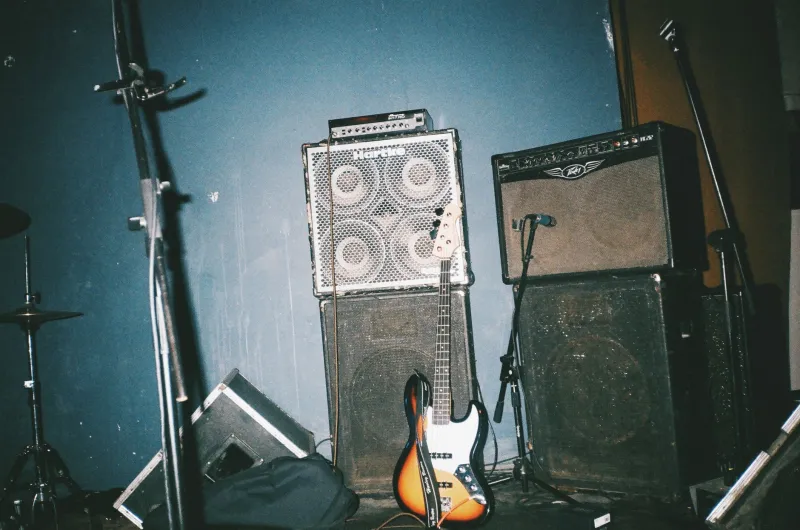
Underground spaces take a different approach. Stacked speaker systems — often custom-built or sourced from boutique manufacturers like Void Acoustics, Funktion-One, or homegrown American builders — are positioned to create a gradient. The floor in front of the system is where the full frequency spectrum converges. The bass bins are low to the ground, sometimes pointed at the floor itself to maximize room coupling. The mid-range horns are aimed at ear height in the center of the dance floor. The high-frequency drivers are angled to disperse without piercing.
What this creates is a reward system. The closer you are to the system, the more complete the sound. The more you're willing to surrender to the room, the more the room gives back. Casual listeners tend to hang at the edges. The devoted push to the center. The speaker placement literally sorts the crowd.
Frequency Response as a Cultural Statement
There's also the question of what frequencies a system is tuned to emphasize. Mainstream clubs, especially those catering to EDM festival crowds, are often tuned bright — lots of high-end energy, punchy mid-bass, relatively scooped sub. It's exciting on first listen. It translates well to phone videos. It's designed to create moments.
Underground systems are frequently tuned the opposite way. Heavy sub-bass extension, often reaching down into the 30–40 Hz range where you stop hearing and start feeling. Rolled-off highs that reduce listener fatigue over a four-hour set. A midrange presence that lets the texture of synthesizers and drum machines breathe rather than cut.
This is a sound that takes time to appreciate. It rewards attention. It punishes passive listening. If you're not actually listening — if you're just there for the social experience — you're going to find it overwhelming, disorienting, or just plain loud without understanding why.
That's the point.
The Ethics of the Acoustic Velvet Rope
It's worth asking whether using sound design as cultural gatekeeping is actually a good thing. There's a real tension here. Underground dance culture has historically been a refuge for people pushed to the margins — Black and queer communities who built these spaces precisely because mainstream nightlife excluded them. Using sound as a filter can start to feel like a different kind of exclusion.
The promoters and engineers doing this work tend to draw a distinction. The filter isn't about who you are — it's about how you engage. A first-timer who walks in with genuine curiosity and openness is going to have a transformative experience. Someone who walks in with entitlement, treating the room like a backdrop for their night out, is going to have a hard time. The room responds to intention.
"We're not trying to keep people out," one Brooklyn-based promoter explains. "We're trying to keep the energy in. There's a difference."
What the Room Knows
At the end of a long night, after the last track fades and the lights come up, the rooms that hit hardest are always the ones that felt like they were built for this — for people who came to listen, to move, to be changed by something. That's not an accident of architecture. It's a decision made by people who understand that sound is culture, and that the way a room is tuned says everything about what that room values.
The mainstream club machine keeps getting louder, flashier, and more optimized for the casual night out. The underground keeps building rooms that ask more of you. And the people who find those rooms, who feel that first kick drum rearrange something inside their chest — they tend to keep coming back.
The room remembers who showed up ready.