Unplug Everything: Why Some Ravers Are Torching the Gear and Starting Over With Their Hands
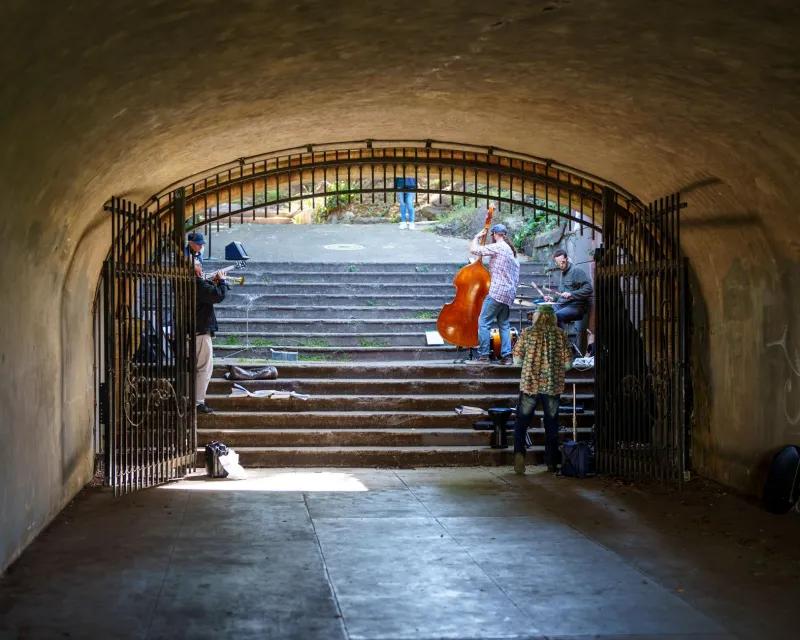
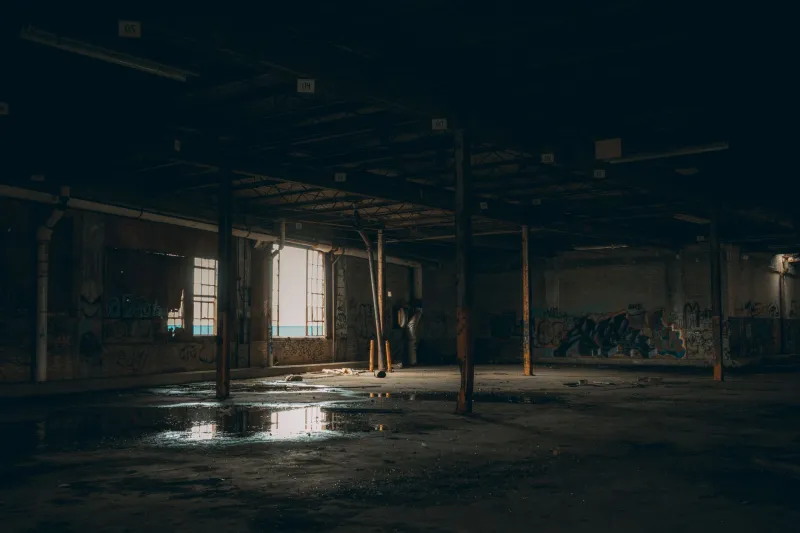
Somebody killed the power at a warehouse on the east side of Detroit last spring, and instead of clearing out, about two hundred people stayed. A drummer started playing. Then a hand percussionist. Then someone pulled a saxophone out of a backpack like they'd been waiting for exactly this moment. What followed, by most accounts from people who were there, was one of the most genuinely transcendent collective experiences any of them had felt in years — and not one bar of it came through a PA system.
That night wasn't planned. But the idea it sparked very much is.
Across the country, a loose, decentralized countermovement is taking shape inside the underground dance world. Call it acoustic rave, call it unplugged culture, call it whatever you want — the people doing it are mostly too busy actually doing it to worry about labels. What they share is a deliberate, sometimes defiant rejection of the electronic infrastructure that built the scene they love, replaced with live percussion circles, acoustic instrument jams, and warehouse or outdoor gatherings where the only amplification is the room itself and the bodies inside it.
The Contradiction That Actually Makes Sense
On the surface, rave culture without electronics feels like a punchline. The whole thing was built on synthesizers, drum machines, samplers, and the specific euphoria that comes from a subwoofer hitting you somewhere below the sternum. To strip all of that away seems less like evolution and more like self-erasure.
But spend any time talking to the people leading this shift and a different picture emerges. Many of them aren't newcomers who stumbled into the scene and got bored. They're veterans — promoters, longtime DJs, producers with real catalogs — who feel like something essential got hollowed out somewhere along the way. The gear got better, the productions got bigger, and somewhere in that scaling-up, the raw human unpredictability that made early underground parties feel genuinely dangerous and alive got quietly engineered out.
"I've played on some incredible systems," says one Chicago-based DJ who now organizes monthly acoustic sessions in a Logan Square rehearsal space. "And there's something about that that's just... solved. You know what you're going to get. The room knows what it's going to get. An acoustic circle, nobody knows what's coming next. That's the feeling I got from raving when I was nineteen, and I've been chasing it ever since."
What These Gatherings Actually Look Like
Forget the image of a drum circle in a park with people in tie-dye. That's not what this is. The aesthetic is still very much underground — industrial spaces, low light, people in the same dark utilitarian fits you'd see at any warehouse party. The difference is what's making the sound.
In Brooklyn, a collective called Resonant Body has been hosting bi-monthly events since late 2023 that feature rotating groups of percussionists, woodwind players, and vocalists performing in real time to a dancing crowd. In Portland, a crew has been organizing outdoor acoustic raves in the Columbia River Gorge, timing events to natural acoustics and using terrain as a kind of passive amplification. In Atlanta, a promoter known for booking cutting-edge techno acts quietly started a parallel series of events featuring only live hand drummers and string players — and says the waitlist for those is now longer than anything electronic she's put on.
The format varies. Some events run on a loose improvisational framework where musicians respond to the crowd's energy in real time. Others are more structured, with performers rehearsing arrangements but leaving significant room for spontaneous response. What they share is physical presence and irreproducibility — there's no recording that captures it, no set you can listen to later on SoundCloud, no way to experience it except by being there.
The Technology Question
Not everyone in the acoustic movement is anti-technology in any principled sense. Many participants still produce electronic music, still DJ, still love a well-tuned system. The rejection isn't ideological so much as it's corrective — a deliberate counterweight to a culture that has become, by some measures, almost entirely mediated by screens and software.
There's also a class dimension worth acknowledging. Electronic music production has gotten cheaper, but it's still a gear-dependent hobby with a meaningful cost floor. A quality acoustic gathering can happen with instruments people already own, in spaces that don't require the same kind of sound system investment. In cities where venue costs keep climbing and promoters are getting squeezed from every direction, acoustic events offer a real logistical alternative — not just a philosophical one.
That said, some participants are drawing harder lines. A growing number of events explicitly ban phones and recording devices, not as a trendy anti-photography flex, but as a genuine attempt to recreate the sealed, ephemeral quality of early rave culture before documentation became default. You were there or you weren't. The experience belonged to the room.
Trend Cycle or Genuine Rupture?
The skeptics have a point worth hearing. Underground culture has always had a talent for consuming its own rebellions. The moment something becomes a recognizable aesthetic, it starts getting packaged — and an acoustic rave aesthetic is absolutely packageable. Give it eighteen months and there will probably be a festival stage branded around the concept, a Spotify playlist called "Acoustic Underground Vibes," and a think piece in a major outlet declaring it the future of live music.
But the people inside it right now seem genuinely unconcerned with that trajectory, which is itself a kind of tell. The Chicago DJ who runs the Logan Square sessions shrugs when asked about the trend question. "Everything becomes a trend. The underground became a trend. Doesn't mean the thing underneath it wasn't real."
What the acoustic movement seems to be reaching toward — imperfectly, inconsistently, sometimes pretentiously — is a version of communal physical experience that predates the specific technologies of rave culture but shares its core impulse: a group of people using rhythm and space to dissolve the ordinary separateness of individual existence, even briefly, even messily.
The tools are different. The feeling, by all accounts, is the same.
What the Underground Can Learn From Going Quiet
Whether this countermovement grows into something lasting or gets absorbed back into the main current of electronic culture, it's already doing something useful — reminding a scene that sometimes gets very serious about its technology that the technology was always in service of something more basic. Movement. Connection. The weird, temporary community that forms when a group of strangers decides to be in the same room and make noise together.
Rave culture built something genuinely remarkable over forty-plus years of underground evolution. The acoustic faction isn't trying to burn that down. They're just asking what survives if you strip the gear away — and finding out, with some regularity, that the answer is: more than you'd think.