The Crowd Is the Booker Now: Inside the Movement to Let Ravers Run Their Own Lineups
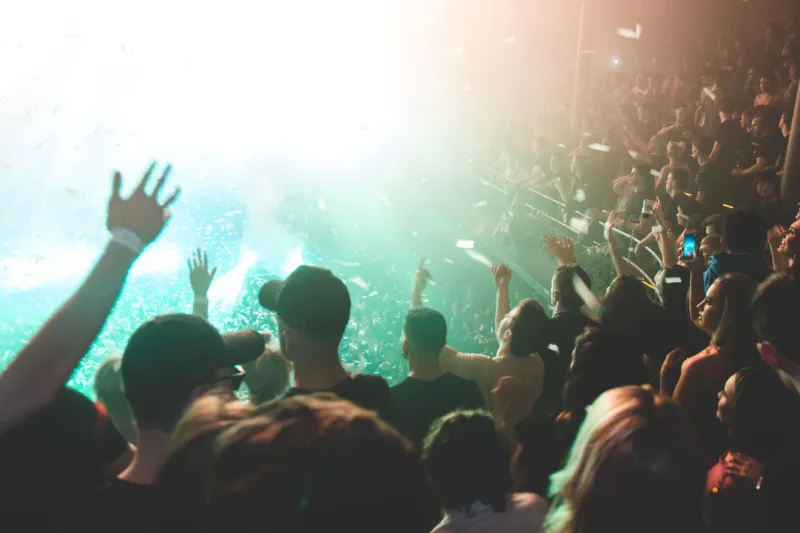
For most of rave culture's history, the promoter was god. They picked the venue, locked in the talent, set the door price, and decided which 400 people got to have the best night of their lives. You either trusted them or you didn't show up. There wasn't a third option.
That's starting to change — slowly, messily, and with a lot of Discord drama along the way.
Across the US, a loose network of underground collectives is experimenting with something genuinely weird: letting the community itself curate the event. Not in a "fill out this Google Form" kind of way, but through structured voting systems, decentralized platforms, and in some cases, actual on-chain governance tools that make decisions binding and transparent. The promoter doesn't disappear exactly, but the role gets distributed across dozens or hundreds of people who have actual skin in the game.
It's called community-curated event governance, or more casually, collective booking. And depending on who you ask, it's either the most exciting structural shift underground dance culture has seen in a decade — or a well-intentioned experiment that keeps recreating the same hierarchies it claims to dismantle.
How It Actually Works
The mechanics vary a lot from crew to crew, but the general shape looks something like this: a collective announces a date and a rough budget. Community members — sometimes verified through token ownership, sometimes just through longstanding membership in a private server — submit nominations for DJs, vote on set times, and weigh in on logistical decisions like door price and capacity limits. Final results get posted publicly. Everyone can see exactly how the decisions were made.
Some groups are using platforms like Snapshot, a blockchain-based voting tool originally built for DAO governance in the crypto space, to run their polls. Others are keeping it lower-tech but still transparent — shared spreadsheets, ranked-choice voting in Telegram channels, public tallies that anyone in the community can audit.
Marcus T., one of the organizers behind a Chicago-based collective that's been running community-voted events since early 2023, describes the appeal as pretty straightforward. "We were tired of showing up to events where the lineup felt like it was designed for someone else," he says. "Not bad DJs, just — not our scene. When you let the actual community decide, you get something that feels like it belongs to them. Because it does."
The collective has run six events using some form of collective input. Attendance has grown each time.
The Part Nobody Talks About
Here's the thing about democratic systems: they tend to reflect the demographics of whoever's actually participating. And in underground rave spaces, that's rarely as diverse as the culture itself.
Several organizers who've experimented with collective booking pointed to the same uncomfortable pattern. Early adopters — the people who show up to every vote, who understand the platform, who have the time and energy to engage deeply — end up wielding disproportionate influence. Which means the "community" making decisions is often a pretty specific slice of the community.
"It's the same twelve people voting every time," admits Dani R., who helped organize a Brooklyn-based collective event last fall. "And those twelve people have great taste, but they're also mostly the same kind of person. We ended up with a lineup that was technically community-chosen but still felt like it came from one particular corner of the scene."
This is the paradox at the heart of the whole experiment. Decentralization doesn't automatically mean equity. It just moves the power around. If the tools for participation are unfamiliar or inaccessible — and blockchain-based voting tools absolutely can be — you've just created a new barrier with better branding.
Some collectives are actively trying to solve for this. One LA-based group built a tiered participation model where newer members get weighted votes on certain decisions specifically to counterbalance the influence of the loudest voices. Others have instituted rotating stewardship roles so that no single person or faction controls the nomination process across multiple events.
What Happens to the DJ in All This
One angle that doesn't get enough attention: how do the artists themselves feel about being voted on?
For some DJs, especially those earlier in their career, collective booking is a genuine opportunity. Getting nominated and voted in by a community that actually knows your music is a different kind of validation than getting a slot because you're friends with the right promoter. Several producers interviewed for this piece said they'd actively sought out collectives running these models specifically because they felt like fairer pathways into a scene.
But not everyone is comfortable with the format. "It can feel weird," says one Chicago house DJ who asked to remain anonymous. "Like, my art is being put to a popularity contest. And I get the appeal, but popularity isn't always the same thing as fit. Sometimes the right DJ for a room is someone the room doesn't know yet."
This tension — between democratic preference and curatorial vision — is one that traditional promoters have always navigated, usually by just making the call themselves. When you distribute that decision, you also distribute the responsibility for getting it wrong.
The Bigger Picture
Collective booking doesn't exist in a vacuum. It's part of a broader cultural moment where underground dance communities are interrogating every power structure that shapes their experience — who profits, who decides, who gets access. The same impulse driving harm reduction networks and DIY venue projects is showing up here, applied to the question of who gets to build the lineup.
And honestly? Even the imperfect versions of this experiment are producing something valuable. Events where the community has genuine input tend to generate a different kind of investment from attendees. People show up differently when they helped decide what they're showing up for. There's ownership in it. That's not nothing.
The collectives doing this work aren't claiming to have solved anything. Most of them would be the first to tell you the model is still full of bugs. But the willingness to try — to treat the dance floor as a space worth governing thoughtfully rather than just monetizing efficiently — feels like exactly the kind of energy underground culture was built on.
The promoter isn't dead. But the idea that one person with a Rolodex and a venue contact should be the sole architect of your night out? That's looking a lot more fragile than it used to.