Rust Belt Rising: How Rave Culture Is Planting Roots in America's Forgotten Cities
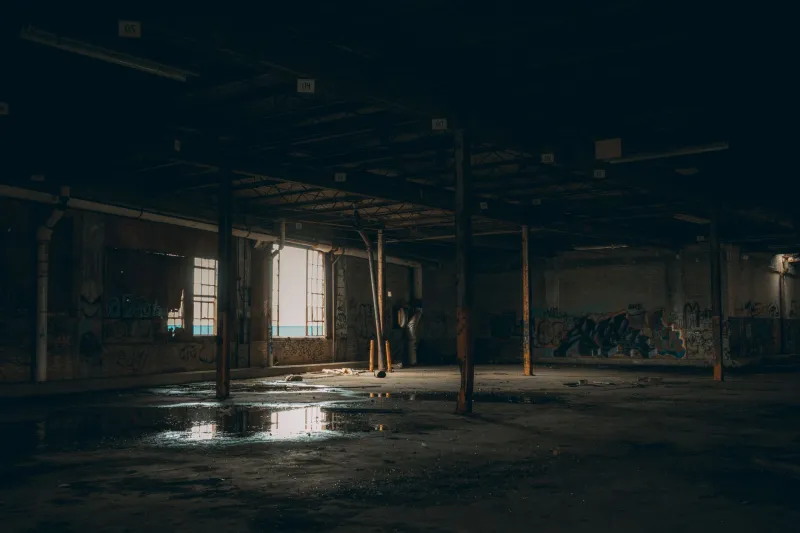
Somewhere in a former steel town in eastern Ohio, a crew of about forty people is loading a sound system into a building that last housed a furniture manufacturer sometime around 2003. The ceiling is thirty feet high. The floor is poured concrete. The landlord charged them four hundred dollars for the weekend and was genuinely grateful for the call.
This isn't a story about squatting. It's not a story about gentrification either, though that conversation is worth having. This is a story about a quiet migration happening at the edges of American rave culture — one where the people who built underground scenes in Brooklyn, Chicago's West Side, and East LA are packing their gear and heading somewhere most of their friends wouldn't even think to Google.
They're going to the Rust Belt. And some of them aren't coming back.
Why Leave When the Scene Is "There"?
If you've been paying attention to the underground over the last few years, you already know the short answer: the scene isn't really "there" anymore, at least not the way it used to be. Post-pandemic rent explosions gutted the warehouse corridors that fed underground culture in major metros. The rehearsal spaces, the cheap lofts, the flex-use industrial blocks where promoters could negotiate a handshake deal — a lot of that is gone, swallowed by mixed-use development and the relentless math of urban real estate.
What replaced it in most cities was a sanitized version of club culture. Bottle service crept back in. Capacity rules got enforced selectively. The soul of a lot of these scenes got priced out before the crowds even noticed.
For a specific type of raver — the ones who were never in it for the Instagram story, who actually care about acoustics and community and what's happening on the floor — that calculus started pointing somewhere unexpected.
"I was paying eighteen hundred a month for a room in a city where I couldn't afford to throw events anymore," says one promoter who relocated to a mid-sized city in western Pennsylvania two years ago and asked to be identified only as Dex. "I moved here, I'm paying six hundred for a three-bedroom, and I've got three warehouses within walking distance that nobody's touched in fifteen years. You do the math."
The Spaces That Nobody Wanted
The Rust Belt — that broad arc of post-industrial cities and small towns stretching from upstate New York through Ohio, Indiana, Michigan, and down into western Pennsylvania — has been losing population since the 1970s. The collapse of American manufacturing left behind an almost incomprehensible inventory of abandoned infrastructure: factories, distribution centers, mill buildings, storage facilities. Most of it sits dormant, owned by municipalities or private holders who've long since stopped expecting a return.
For underground rave culture, this is the closest thing to a gift that doesn't come with strings.
Cities like Youngstown, Ohio; Gary, Indiana; Flint, Michigan; and smaller towns throughout the region have seen crews quietly negotiate short-term leases, month-to-month agreements, and even informal arrangements with property owners who are simply relieved that someone wants to use the space at all. Local governments, starved for any economic signal that doesn't involve another failed development proposal, have in some cases been surprisingly receptive.
"We had a conversation with a city council member in the second month we were here," says one organizer who moved her crew from Philadelphia to a small industrial city in upstate New York. "She didn't fully understand what we were doing, but she understood that we were bringing people into town, filling hotel rooms, and spending money at local businesses. That was enough for her."
It's not always that smooth. Zoning issues surface. Noise complaints happen. The infrastructure in some of these buildings is genuinely dangerous, and responsible crews have had to invest real money in electrical upgrades, fire safety, and basic structural assessments. But compared to the legal and financial gauntlet of throwing events in a major metro, the friction is different in kind, not just degree.
Building Community, Not Just Events
What separates the crews who are actually putting down roots from the ones who are just venue-shopping is the commitment to staying. The most compelling stories coming out of this migration aren't about one-off events — they're about people who moved their lives.
In one mid-sized Ohio city, a collective that started as a Detroit techno crew has spent the last eighteen months transforming a former auto parts warehouse into a multi-use creative space. They host events on weekends, but during the week the building functions as a rehearsal space, a recording studio, and a gathering point for local artists who had nowhere to work. The crew brought their culture with them, but they also plugged into the community that was already there.
"The people who live here aren't waiting for us to show them what cool looks like," says one member of that collective. "They've got their own thing. Our job is to connect, not to colonize."
That distinction matters. The critique of arts-led migration into economically distressed communities is real and legitimate — history is full of examples where creative scenes moved into struggling neighborhoods, raised the cultural profile, and ultimately contributed to displacement. The crews who are thinking seriously about this are the ones building relationships with existing local organizations, hiring locally, and keeping ticket prices accessible to people who actually live there.
The Sound Is Different Out Here
There's also something happening to the music itself in these spaces that's worth noting. Thirty-foot ceilings and raw concrete don't behave like the treated rooms in purpose-built clubs. The acoustics are unpredictable, sometimes punishing, occasionally transcendent. DJs who've played both say the Rust Belt warehouse sound is its own thing — more physical, less controlled, with a low-end presence that you feel in your sternum before you process it with your ears.
Some producers who've relocated talk about the environment changing how they work. Less pressure to chase trends. More time to experiment. The cost of living difference alone — being able to work part-time and still make rent — frees up creative bandwidth that was simply unavailable when every month was a financial scramble.
What Comes Next
Nobody is pretending this is a permanent solution or a utopia. The same market forces that made coastal cities unlivable for underground culture don't stop at the city limits. If these scenes grow — and some of them are growing fast — the attention they generate will eventually attract the same development pressures they were trying to escape.
But for now, in this particular window, something genuinely interesting is happening in the forgotten corridors of post-industrial America. Crews are building something real in places that most of the country wrote off decades ago. The warehouses are getting sound systems. The concrete floors are getting bodies on them. And in cities that have been waiting a long time for a reason to stay up past midnight, the lights are finally back on.
The underground always finds a way. Right now, it's finding a way through Youngstown.