Sunrise Hustle: How DJs and Promoters Are Building Real Income After Last Call
Photo: IthakaDarinPappas, CC BY 4.0, via Wikimedia Commons
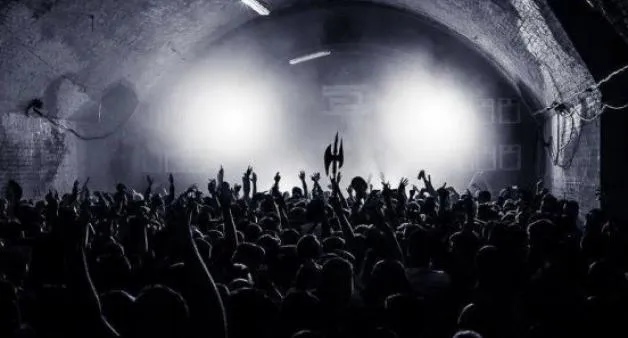
It's 3:17 in the morning in a warehouse off a highway in East Austin, and DJ Sable is forty minutes into a set she wasn't paid to play. There's no contract. No rider. No green room. Just a Pioneer setup borrowed from the collective that texted her two hours ago, a room full of people who found the address through a Discord link, and a Venmo handle taped to a folding table near the door.
By sunrise, that table will have collected somewhere between $800 and $1,200 in door donations. Sable will walk away with a cut. The sound person gets a cut. The space gets a cut. And the collective that organized the whole thing in roughly ninety minutes — they'll pocket enough to fund the next one.
This is the afterparty economy. It's been running quietly beneath America's nightlife infrastructure for decades, but in the past few years it's evolved into something more intentional, more organized, and more financially serious than most people outside the scene realize.
Why the Afterparty Scene Has Gotten Bigger
Blame the venues, honestly. As bar closing times have stayed frozen at 2 a.m. across most of the US — while cities like New York have fought bitter battles just to extend hours slightly — the demand for somewhere to go after last call has never been higher. The people who want to keep dancing don't disappear when the lights come on. They just relocate.
At the same time, the cost of playing a legitimate venue gig has gotten harder to justify for a lot of underground DJs. Venue cuts, booking fees, promotion costs — by the time a mid-tier electronic act finishes a Saturday night at a proper club, the math often doesn't pencil out. An afterparty, by contrast, has almost no overhead. No venue contract. No ticket platform taking 10 percent. Just a space, a sound system, and a community willing to show up.
"I make more money at afterparties than I do at club gigs half the time," says a Chicago-based DJ who goes by Dread Vessel and has been playing the underground circuit for six years. "At a club, you're negotiating against a booker who's already thinking about their margin. At an afterparty, it's direct. The people there want to be there. They're happy to pay."
The Mechanics of the Door Tax
The phrase "door tax" has become the underground's preferred euphemism for the informal cover charge that funds most afterparties. It's not a ticket. It's not a fee. It's a suggested contribution — $10, $15, $20, whatever the vibe calls for — collected via Venmo, Cash App, or occasionally actual cash by whoever's working the entrance.
The looseness is intentional. Calling it a "donation" or a "tax" rather than a cover creates legal distance between the event and anything resembling a licensed venue. Whether that distinction holds up under scrutiny depends entirely on the city, the cop, and the night — but it's the framework most underground collectives operate within.
Revenue splits vary by collective, but a common model looks something like this: 40 percent to the headlining DJ, 20 percent to the space or host, 20 percent to the collective's operating fund, and 20 percent split between supporting acts and crew. Some collectives are more formalized about this than others, with shared spreadsheets and regular payment cycles. Others run purely on trust and long-term relationships.
"We've been doing this long enough that everyone knows what they're getting," says Priya, who co-runs a Los Angeles-based collective called Haze Protocol. "We don't do contracts. We do reputation. If you short someone, word gets around fast."
Discord as Infrastructure
If Venmo is the afterparty economy's payment layer, Discord is its nervous system. The most successful underground collectives aren't just throwing one-off events — they're running membership communities that function like subscription services for dedicated fans.
Haze Protocol's Discord has roughly 1,800 members across several tiers. Free members get advance notice of public events. Paid members — who contribute $5 to $15 a month through a linked Patreon — get access to private channels where afterparty locations drop 90 minutes before doors open. Top-tier members get a standing invite to every event, priority entry, and occasional access to invite-only sunrise sets that never get announced publicly.
This tiered model turns the afterparty from a transaction into an ongoing relationship. It also provides a revenue floor — Haze Protocol's monthly Patreon income covers their base equipment rental costs regardless of how any individual event performs.
"The subscription money means we never have to throw a party we're not feeling just to pay for the last one," Priya explains. "We only do it when it's right. That's kept our quality high and our community tight."
The Legal and Safety Tightrope
None of this comes without risk, and it would be irresponsible to pretend otherwise. Unpermitted events in unlicensed spaces carry real consequences — noise complaints, police shutdowns, fire code violations, and in worst-case scenarios, the kind of tragedies that have haunted the underground since the Ghost Ship fire in Oakland in 2016.
The most serious collectives have internalized these lessons. They scout locations carefully, prioritize spaces with multiple exits, keep attendance capped well below capacity, and maintain relationships with neighbors to minimize complaint risk. Some have started quietly working with sympathetic venue owners who rent out spaces off-the-books on weekend nights, providing a more controlled environment without the overhead of a formal venue contract.
Dread Vessel is blunt about the calculus: "We're not trying to be reckless. We're trying to keep people safe and also keep the scene alive. Those two things aren't in conflict if you're doing it right."
Residency Models and Long-Term Hustle
For DJs looking to build something more sustainable than a string of one-off gigs, the residency model has become the afterparty economy's answer to a steady paycheck. A residency — even an informal one at a recurring underground event — provides predictable income, a built-in audience, and the kind of deep-set experience that sharpens a DJ's craft faster than occasional club bookings ever could.
Sable, back in Austin, has played the same collective's monthly warehouse event for eighteen months running. She doesn't get a guarantee, but she gets a reliable cut of the door, a community that shows up specifically because she's on the lineup, and a platform to develop her sound in real time.
"I've learned more about reading a room in the last year and a half than in the five years before it," she says, wrapping cables at 6:30 a.m. as the last stragglers filter out into the pale Texas morning. "There's no algorithm here. No setlist I planned three weeks ago. It's just me and whoever stayed."
That's the afterparty economy in its purest form — improvised, intimate, and somehow more economically honest than most of what happens before last call.