Read the Room: A Region-by-Region Breakdown of America's Underground Rave Circuit
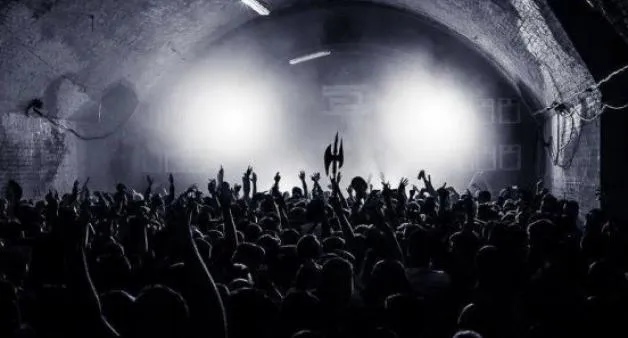
Photo: underground warehouse rave crowd dancing dark lights smoke USA, via thefestivalvoice.com
America's underground rave circuit isn't one thing. It's dozens of distinct ecosystems, each shaped by local history, geography, economic conditions, and the specific weirdos who showed up first and refused to leave. A Detroit warehouse party and an LA desert gathering share a general spiritual DNA — darkness, bass, community, liberation — but walking into each one without knowing the local culture is like showing up to a potluck in the wrong country. You might be welcome, but you're going to feel it if you don't know the customs.
This isn't a guide to festivals with wristbands and sponsored stages. This is about the real thing: the underground circuit that runs on word-of-mouth, encrypted channels, mutual trust, and a genuine love of the music. Here's what's actually going on, region by region.
Detroit: The Mothership
You don't visit Detroit's underground to discover something new. You go to pay respect to something foundational.
Techno was born here, and the scene treats that history with a kind of reverence that can feel almost ceremonial to outsiders. The Movement Festival in May is the publicly visible tip, but the real action happens in the weeks surrounding it — underground parties in warehouses along the Corktown and Eastern Market corridors, afterparties that don't start until 4 AM, intimate basement sets from artists who helped invent the genre.
Detroit's underground is notably less tolerant of performative participation. People are there for the music, full stop. Standing near the DJ booth filming on your phone will earn you looks that could peel paint. The dance floor is a functional space, not a content backdrop. Come to dance, come to listen, come to connect — but come correct.
Seasonally, Detroit's indoor scene runs hard from October through April. Summer brings more outdoor and semi-outdoor events, but the warehouse culture is fundamentally a cold-weather phenomenon. If you're visiting specifically for the underground experience, late spring around Movement season or deep winter both offer access to parties that don't show up on any app.
Brooklyn: The Loft Lab
New York's underground is sprawling, fragmented, and constantly reinventing itself — which makes it both exciting and occasionally exhausting. Brooklyn is the center of gravity, particularly the Bushwick and Ridgewood corridors, where converted industrial spaces and artist lofts host everything from minimal techno nights to experimental club events that blur the line between music and performance art.
The Brooklyn scene rewards genuine community investment. The best parties here aren't found through Google. They move through text chains, Instagram close-friends stories, and the kind of trust networks you build by actually showing up to smaller events and being a decent human. Promoters in this scene are often artists themselves, and they curate guest lists accordingly.
Culturally, Brooklyn underground spaces tend to be explicitly queer-affirming and politically aware. Dress codes are more about intentionality than any specific aesthetic — show up like you thought about it, whatever that means to you. The music leans heavily into warehouse techno, UK-influenced sounds, and hyperpop-adjacent club music depending on the night.
Winter and early spring are peak underground season in Brooklyn. Summer sees a lot of the scene migrate to outdoor events in upstate New York or the Catskills, with some promoters running irregular open-air gatherings accessible only through their own channels.
Chicago: The House Foundation
Chicago's relationship to house music is ancestral, and the underground scene here reflects that in ways both beautiful and occasionally insular. The city's South and West Side communities remain the cultural bedrock of a sound that conquered the world — and the underground parties that honor that lineage are some of the most emotionally resonant events you'll find anywhere in the US.
The Chicago scene operates on a slower, warmer social tempo than New York or LA. There's more emphasis on knowing the DJ, knowing the promoter, knowing someone at the door. Cold-calling your way into an underground Chicago party is harder than in most cities. But if you've done the work — followed the right people, attended the public-facing events, built real connections — the doors open to spaces that feel genuinely sacred.
Look for events clustered around the Pilsen and Logan Square neighborhoods for more accessible entry points. The summer is actually one of Chicago's stronger underground seasons, with outdoor events complementing the year-round indoor circuit.
Los Angeles: The Desert and the Dark
LA's underground scene is geographically enormous and stylistically diverse in ways that reflect the city itself. There's no single neighborhood that anchors it. Instead, the scene sprawls across Downtown warehouse corridors, Silver Lake DIY spaces, and — most distinctively — the desert.
The Mojave Desert and Joshua Tree area have become genuinely iconic backdrops for underground gatherings, particularly in spring and fall when temperatures allow for outdoor events. These desert parties range from intimate 200-person gatherings to sprawling multi-day experiences that exist in a legal gray area and operate entirely on community trust. Getting to one requires connections, and the remoteness is intentional — it creates a self-selecting filter.
LA's indoor underground runs through pockets of DTLA and East LA, with a strong emphasis on bass music, experimental club sounds, and a broader stylistic range than more genre-defined cities. The scene is notably more aesthetically expressive — elaborate outfits, art installations, and immersive production values show up even at smaller events.
Spring and fall are the prime seasons for desert gatherings. Winter drives the scene indoors, where warehouse events in DTLA pick up significantly.
The Midwest and South: The Overlooked Circuit
Beyond Chicago and Detroit, the American heartland and South have underground scenes that consistently fly under the national radar — which, honestly, keeps them healthier.
Kansas City has a quietly thriving underground rooted in DIY ethics and a strong cross-pollination between electronic music and the city's jazz heritage. Atlanta's scene blends Southern bass traditions with a growing techno contingent centered around a tight-knit community of Black producers and DJs. New Orleans brings its own temporal weirdness — a city where the night genuinely doesn't end, and underground parties exist in a kind of parallel timeline to the tourist-facing nightlife.
These scenes tend to be smaller, more communal, and more accessible to genuine outsiders who approach with humility. Show up, listen more than you talk, tip the bartender, and don't make the night about your experience.
The Universal Rules
Regardless of where you land on the underground circuit, a few things hold everywhere: ask before you photograph people, respect the space like it's borrowed (because it often is), and understand that these communities exist in part because they've built walls against exactly the kind of casual tourism that can hollow out a scene.
The underground is worth seeking out. It's where the music is most alive, where the culture is most genuine, and where the nights hit different in a way that no festival main stage can replicate. But you earn access by being a real participant, not a spectator.
Go there to give something back. The rest follows.