Gone Viral, Got Booked: How TikTok Sounds and Discord Servers Are Rewriting Dance Music's Power Structure
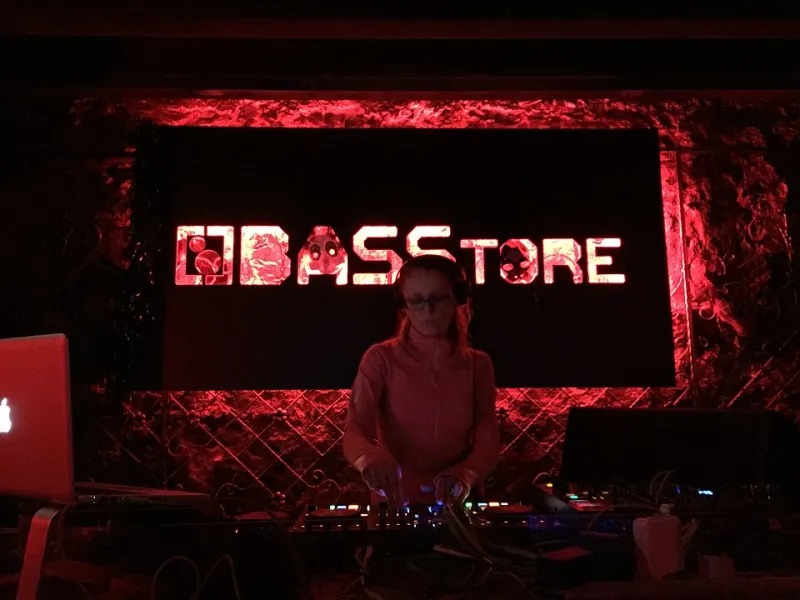
Photo: Rinazh, CC BY-SA 4.0, via Wikimedia Commons
Somewhere in Austin right now, a nineteen-year-old just uploaded a thirty-second clip of a track she made in her dorm room. She added a trending sound tag, stitched it with a transition video, and went to sleep. By morning, it had 200,000 views. By the end of the week, she had two booking inquiries, a Spotify editorial pitch, and a DM from a label she'd been following for two years.
This isn't a fantasy. It's Tuesday in 2024.
The traditional path through electronic music — demo tapes, industry showcases, years of cultivating relationships with A&Rs who may or may not actually show up to your set — is being quietly dismantled. In its place, a new infrastructure has emerged, built on fifteen-second videos and hyperactive Discord servers. And the artists who understand this shift are moving faster than any label development deal could have taken them.
The Old System and Why It Was Already Broken
For decades, breaking into dance music meant playing the game on the industry's terms. Labels controlled distribution, A&Rs controlled access, and radio programmers controlled what got heard. Even in the post-SoundCloud era, the path to visibility was largely gated by who you knew and which cities you could afford to play in.
The underground always had its own ecosystem — tape trading, pirate radio, record store culture — but the mainstream infrastructure was notoriously difficult to crack without a co-sign from someone already inside it.
TikTok didn't just crack that door. It ripped it off the hinges.
How a TikTok Sound Ends Up in a Club
The pipeline from TikTok virality to club rotation is more direct than most people realize, and it moves fast.
When a track gets used in a TikTok trend — whether organically or through strategic seeding — it creates a feedback loop. Listeners who discover the song through the app search for it on Spotify and Apple Music. Streams spike. Algorithmic playlists pick it up. DJs start getting requests for it. Promoters notice the requests. The track ends up on a set list. Suddenly it's being played at Output in New York or Spybar in Chicago, and the artist who made it in their bedroom has a legitimate claim to club credibility.
This happened with a handful of house tracks in 2023 that crossed over from TikTok sounds into actual DJ rotation — tracks that had zero label infrastructure behind them, just a clip that caught at the right moment.
"I watched one of my tracks go from 500 SoundCloud plays to 80,000 streams in two weeks because someone used it in a transition video," said Dex, a Brooklyn-based producer who makes filtered house under the name Lowpass Ritual. "I didn't do anything. I didn't pitch it anywhere. The algorithm just decided it was time."
That's the double-edged reality of platform-driven discovery: the upside is enormous, but the mechanism is largely outside your control. Which is why the smartest artists aren't just posting and hoping — they're engineering the conditions for virality while building community infrastructure that doesn't depend on any single platform's algorithm.
Discord: The New Industry Networking Hub
If TikTok is the public-facing layer of this new ecosystem, Discord is the back channel where the real moves get made.
Electronic music Discord servers have quietly become some of the most valuable spaces in the industry — not just for fans, but for artists, promoters, and yes, label scouts. Servers dedicated to specific genres (deep house, ambient techno, UK garage, whatever's emerging this month) function as living communities where producers share unreleased demos, get real-time feedback, and connect with people who are actively looking for new music.
Some of these servers have become genuinely influential. The right post in the right channel can get a demo in front of a label curator, a playlist editor, or a promoter booking a festival stage — all without a single formal submission or industry introduction.
"I got my first real booking through a Discord server," said Camille, a Los Angeles-based techno producer who plays under the alias Ferric. "Someone in the server was putting together a lineup for a warehouse event and they'd heard a demo I'd shared a few weeks earlier. That led to three more bookings. I've never sent a cold email to a promoter in my life."
Label A&Rs have noticed. Several mid-sized electronic labels have embedded themselves in genre-specific Discord communities specifically to monitor what's getting traction before it surfaces anywhere else. The demo tape has been replaced by the Discord preview — casual, unpolished, and often more revealing of an artist's actual creative direction than anything they'd formally submit.
The New A&R Is Algorithmic — and That's Complicated
Here's where the progressive critique has to enter the conversation: platform-driven discovery isn't neutral, and it doesn't solve all the problems of the old system.
TikTok's algorithm rewards content that performs quickly. That creates pressure toward a specific kind of music — tracks with immediate hooks, short attention spans baked in, sounds that read well in fifteen-second clips. Some artists are thriving in that format. Others are contorting their creative output to fit a mold that doesn't serve the music.
"There's a version of this where the algorithm just becomes the new gatekeeper," said Marcus Williams, who runs an independent electronic music blog out of Detroit. "Instead of an A&R deciding what's commercially viable, it's an engagement metric. And engagement metrics don't necessarily reward the most interesting music — they reward the most immediately accessible music."
That tension is real. House and techno have always had a complicated relationship with commercial accessibility. Some of the most important music in those genres was deliberately difficult, deliberately underground. The TikTok pipeline tends to surface the most digestible version of any sound, which isn't always the most vital one.
Discord, by contrast, tends to be more genre-literate and community-driven. The feedback loops there are shaped by people who actually care about the music — which creates its own biases, but at least they're the biases of enthusiasts rather than engagement algorithms.
What This Means for Artists Right Now
The practical takeaway for anyone making electronic music in 2024 is pretty clear: the tools for building a career without traditional industry infrastructure have never been more accessible. But using them well requires intentionality.
Posting consistently on TikTok — not just finished tracks, but process videos, studio moments, gear experiments — builds the kind of parasocial connection that translates into real fanbase loyalty. Finding and embedding yourself in the right Discord communities creates the network that used to require years of industry schmoozing. And releasing music independently through platforms like DistroKid or Bandcamp keeps you in control of your catalog while you build.
The gatekeepers haven't disappeared. They've just changed shape. Learning to navigate the new ones — algorithms, community dynamics, platform trends — is the skill set that separates artists who break through from those who stay invisible.
But here's what hasn't changed: the music still has to be good. The algorithm can surface a track, but it can't make people love it. The Discord can get a demo heard, but it can't manufacture genuine enthusiasm.
The underground always knew that. It's just nice to finally have the tools to prove it to the rest of the industry.