Rooted: The Resident DJs Betting Everything on One City's Dance Floor
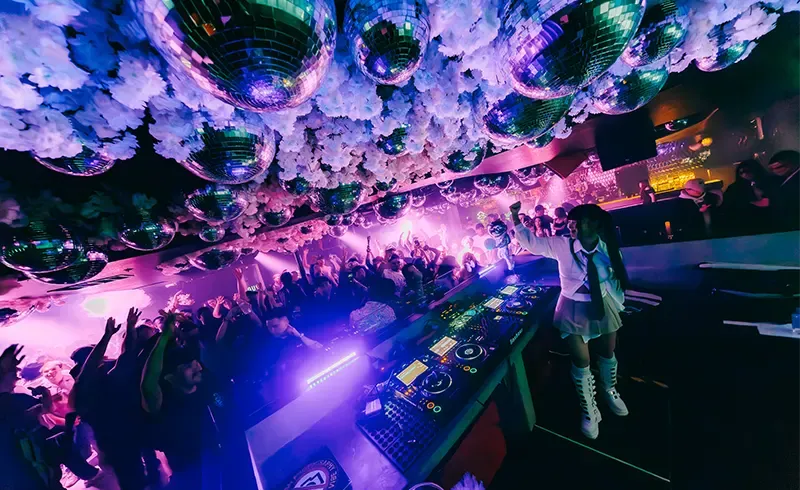
Photo: DJ playing intimate club residency small venue crowd, via bauhauslv.com
There's a script every DJ is supposed to follow. Play the local nights, grind the opening slots, build the SoundCloud, relocate to a bigger city, tour, festival, done. It's a career ladder, and everyone can see the rungs.
A growing number of the underground's best selectors are refusing to climb it.
They're turning down festival slots that pay less than the flight costs. They're declining relocations to Berlin, to LA, to the "scene" that's supposed to validate them. Instead, they're doing something almost countercultural in 2025: committing to one city, one room, one floor — for years.
Call it the residency rebellion. And it might be the smartest career strategy in dance music right now.
The Case Against the Routing Tour
The festival circuit promises reach and delivers something shallower. A 45-minute slot at 2 p.m. on a main stage in front of distracted partiers is, musically speaking, worth very little. You get paid, if you're lucky. You don't get a relationship.
A residency is the opposite transaction. You play the same room monthly, sometimes weekly. You learn what the 1 a.m. crowd wants versus the 3 a.m. crowd. You bomb, publicly, and come back anyway. Over a few years you develop something no booking agent can manufacture: an actual dialogue with a dance floor.
The touring model treats the crowd as an audience. The residency model treats it as a collaborator. Only one of those makes you better.
Three Selectors, Three Cities, One Conviction
In Detroit, a resident who asked to go by her DJ alias, Kestra, has held down a monthly at a 200-capacity loft space for seven years. She's turned down two European bookings that would've meant missing her night. "The room taught me everything," she says. "I know exactly what this floor does at 4 a.m. in February. A festival doesn't know that. I'd be starting over for strangers."
In Philadelphia, a selector who books and plays under the name M.O.T.H. has spent a decade building a night in a former church basement in Kensington. He describes his residency in almost agricultural terms. "You're tending something. You can't tend something you fly past twice a year. The scene here raised me, and my whole thing is raising the next wave right here."
In Albuquerque — yes, Albuquerque — a resident DJ named Cielo Vista has become the anchor of a small but ferocious desert rave scene, declining a Denver move that friends insisted was inevitable. "Everyone said there's no ceiling here," they told us. "That's the point. I'm not trying to hit a ceiling. I'm trying to build a floor."
Loyalty as a Career Strategy — and a Politics
There's an economic argument for staying put: residents become indispensable to their scenes, and indispensable people get booked, get paid better locally, and get flown out on their own terms once the reputation is real. Several of the most in-demand underground names of the last few years built their sound in a single room before anyone outside the city knew them.
But there's a political argument too, and it cuts deeper. The touring model extracts — talent flows from smaller scenes to bigger ones, money flows from local floors to global brands. The residency model invests. It says your city's dance floor deserves world-class residents, not just world-class tourists passing through on a Friday.
In an era when local venues are getting squeezed by insurance costs, noise complaints, and development, the DJ who stays is doing something close to mutual aid. They're keeping a room alive. They're training the openers. They're the reason a 19-year-old in Dayton or Albuquerque or Philly can see world-class selector work without a plane ticket.
The Long Game
None of this means touring is bad, or that ambition is a sin. But the underground has always claimed to value community over clout, and residency is where that claim gets tested. It's easy to love the scene. It's harder to be loyal to a specific room, on a specific street, in a specific city, for a decade.
The DJs doing it aren't standing still. They're planting something. And increasingly, the most interesting sounds in American dance music are coming from the rooms where somebody stayed long enough to grow them.