The Premium Problem: How the Insurance Industry Is Quietly Shutting Down America's Dance Floors
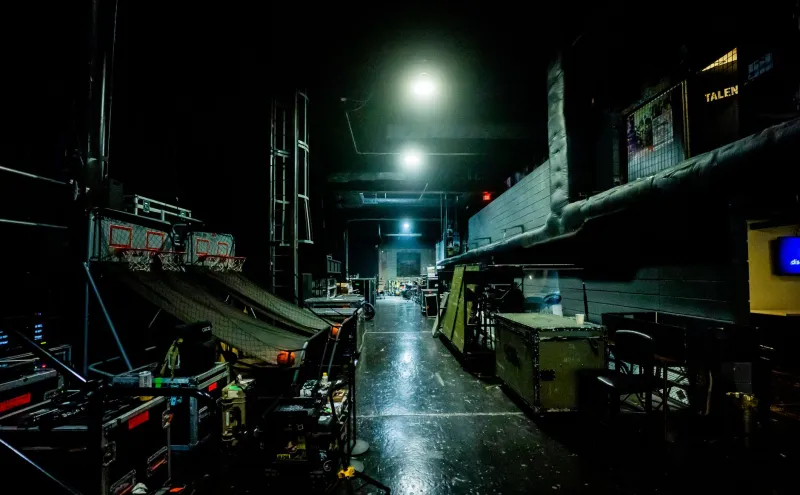
Nobody puts "killed by an actuarial table" on the flyer. But that's increasingly the story of how underground dance spaces in America are disappearing — not in a blaze of police lights or a dramatic city council vote, but in a quiet, almost bureaucratic suffocation. Insurance premiums are climbing at rates that would make a landlord blush, and the venues absorbing those costs are the same ones that built your city's scene from nothing.
It's not a headline that trends. It doesn't make for a great Instagram story. But ask any warehouse operator who's tried to renew their general liability policy in the last three years, and you'll hear the same exhausted version of the same story: the quote came back double, sometimes triple what it was the year before — and that was before anyone filed a claim.
How Insurers See a Dance Floor
To understand why premiums are spiking, you have to understand how the insurance industry thinks about risk — and electronic music venues check almost every box that makes underwriters nervous.
Late hours. Alcohol. Large crowds in spaces that weren't originally built for public assembly. Subwoofers rattling load-bearing walls. Events that sometimes don't appear on any official permit. From a liability standpoint, a warehouse rave looks like a nightmare scenario waiting to happen, and insurers price accordingly.
After the Ghost Ship fire in Oakland in 2016 — which killed 36 people at an underground venue that had no proper permits or fire safety infrastructure — the entire industry recalibrated. Underwriters who had been loosely covering DIY spaces suddenly got very serious about what they were actually insuring. Some pulled out of the market entirely. Others introduced exclusions so broad they effectively made the policies worthless for real-world use.
The ripple effects of that tragedy are still being felt in 2024. Venue operators who weren't even operating in 2016 are paying a premium surcharge for a risk event they had nothing to do with.
The Numbers Nobody Wants to Talk About
A mid-sized underground venue in a major US city — say, a 500-capacity warehouse space in Chicago, Detroit, or Los Angeles — might have been paying somewhere in the range of $8,000 to $12,000 annually for general liability coverage five years ago. Today, operators in those same markets are reporting quotes of $25,000 to $40,000 for comparable coverage, if they can get quoted at all.
For a venue running on razor-thin margins — $8 covers, $4 PBRs, maybe a few hundred bucks from the door split with the headliner — that's not an incremental cost increase. That's a business model that no longer works.
Some operators are absorbing the hit by raising ticket prices, which immediately puts them at odds with the culture. Rave scenes have historically been fiercely protective of accessibility. A $25 cover in a market where $10 used to be standard isn't just a price hike — it's a political statement, and not one that sits well with the community.
Others are quietly dropping coverage altogether. Which is exactly as dangerous as it sounds.
The Private Membership Workaround
Here's where it gets creative — and legally murky.
A growing number of operators across the country are restructuring their events as private membership clubs rather than public venues. The logic is straightforward: if your event is technically a private gathering for dues-paying members rather than a commercial public assembly, your liability exposure looks fundamentally different to an insurer. In some cases, it removes the requirement for certain types of commercial coverage altogether.
In practice, this looks like a $5 or $10 "membership fee" collected at the door, a waiver signed on a phone screen, and a mailing list that technically makes you a "member" of whatever loosely defined collective is hosting the event. It's a legal gray zone that venue lawyers are quietly navigating city by city, jurisdiction by jurisdiction.
Some operators have gone further, formalizing actual membership models — think monthly dues, member IDs, recurring event calendars — that more closely resemble a private social club than a traditional venue. It's more overhead, more administration, but it creates a defensible legal structure that makes the insurance conversation at least slightly less brutal.
Pop-Ups as Survival Strategy
The other adaptation happening in real time is the acceleration of the pop-up model. If you're not operating a permanent venue, you're not carrying the same ongoing liability exposure. You're not renewing an annual policy. You're potentially operating under a short-term event policy — which, while still expensive, is a one-time cost rather than a fixed operational overhead.
Event-specific insurance for a single-night gathering in a rented space can sometimes be obtained for a few hundred to a couple thousand dollars depending on capacity and coverage type. That's a very different calculation than trying to insure a year-round warehouse operation.
The tradeoff is instability. Pop-up culture is exciting until you're the promoter who can't find a space three days before the event because your usual spot got cold feet. It's exciting until the scene fragments so much that there's no institutional memory, no home base, no place where the community actually builds something lasting.
The best underground scenes have always had anchor spaces — venues that provided continuity, that were there every weekend, that newer ravers could find and experienced heads could rely on. Pop-ups can supplement that infrastructure, but they can't replace it.
What Advocacy Could Look Like
A handful of nightlife advocacy organizations — the National Independent Venue Association being the most prominent — have been pushing for policy changes that address some of these structural issues. Dedicated arts and culture zoning classifications, liability caps for compliant small venues, municipal insurance pools modeled on programs that exist in some European cities — these are real proposals that have gotten real traction in a few markets.
New York City's Office of Nightlife, which was established in 2017, has served as a model for other cities looking to treat their after-dark economies as legitimate cultural infrastructure worth protecting. But that office's actual power to intervene in insurance markets is limited. It can advocate, it can convene, it can facilitate conversations between venue operators and city agencies. It cannot make Lloyd's of London care about your warehouse techno night.
The deeper problem is that the insurance industry responds to risk data, and right now the risk data on underground dance venues isn't favorable. Changing that requires a track record of safety, of compliance, of incidents that don't happen — which requires venues to actually stay open long enough to build that record.
It's a catch-22 that the scene has been stuck in for years.
The Floor Deserves Better
None of this is abstract. Every time a warehouse space shuts down because the operator couldn't make the insurance math work, real community infrastructure disappears. The DJ who got their first booking there. The promoter who learned how to run a sound system in that room. The regular who met their entire friend group on that floor.
The insurance industry isn't malicious — it's just indifferent. It doesn't know what a scene is. It doesn't know what it means when the only place in a mid-sized city where a certain kind of music gets played closes its doors. It sees a liability exposure, prices it accordingly, and moves on.
The underground has always been good at surviving things that were never designed with its survival in mind. But this one's quiet and it's cumulative and it doesn't make for a good protest chant. It just makes the map a little smaller, the options a little fewer, the cover a little higher.
And eventually, if nothing changes, it makes the scene something that used to exist.