Static and Signal: Why Pirate Radio Is Back and the Algorithm Has No Answer for It
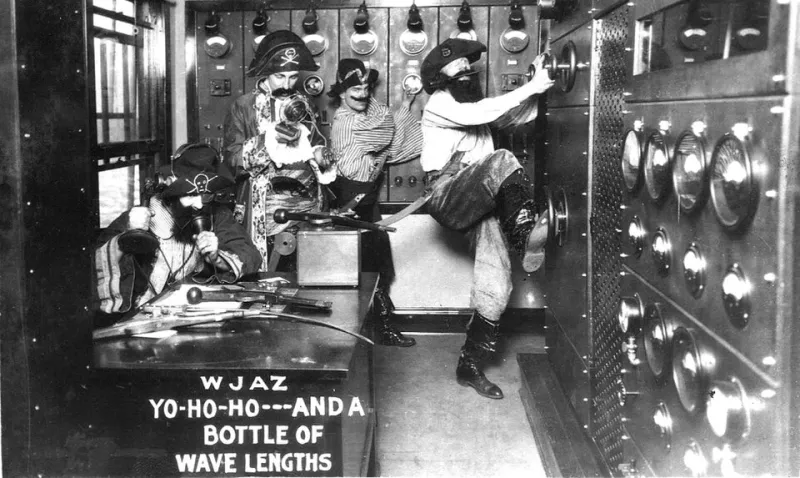
Photo: Uncredited publicity photograph distributed by the Zenith Radio Corporation, Public domain, via Wikimedia Commons
Somewhere in a mid-sized American city — we're not saying which one — a guy named Marcus is running a 50-watt FM transmitter out of a third-floor apartment. He's got a milk crate full of records, a mixer held together with electrical tape, and an antenna running out the window that his landlord thinks is a TV cable. Every Friday night, he goes live at midnight. No playlist. No ads. No skip button.
"I played a forty-five-minute DJ set once and didn't say a single word," he tells us over Signal. "Nobody was curating it for engagement. Nobody was recommending the next thing. It just existed."
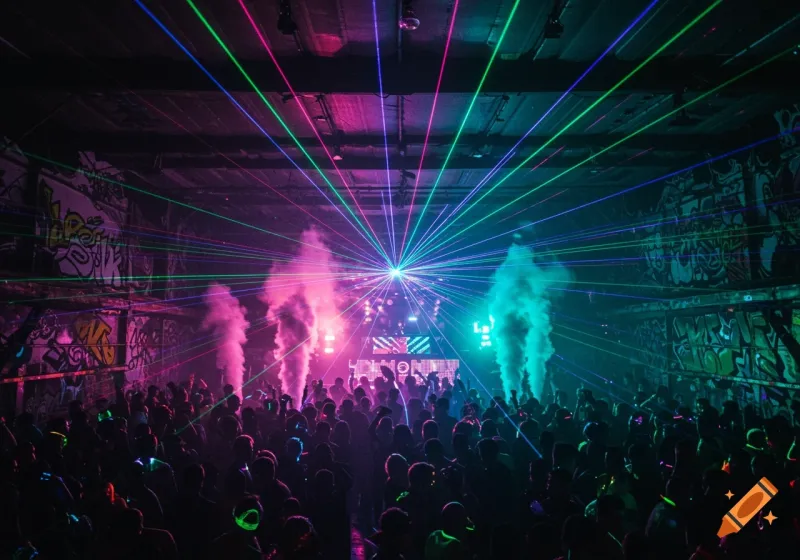
This is the pirate radio revival — and it's happening in cities from Portland to Pittsburgh, from Austin to Atlanta, threading itself through the underground electronic music scene like a carrier wave nobody licensed.
The Algorithm Problem Nobody Wants to Say Out Loud
Here's the thing about streaming platforms: they're incredible at delivering music and absolutely catastrophic at delivering feeling. The underground has always known this. The problem is that knowing something and having a viable alternative are two different things.
For a while, the options were limited. Soundcloud was the scrappy workaround. Mixcloud filled a niche. Bandcamp became a beloved institution. But all of them still operate inside the same basic framework — you upload, the platform decides who sees it, and the relationship between artist and listener gets mediated by code written by people who have never been to a warehouse party in their lives.
Pirate radio sidesteps all of that. When Marcus goes live on Friday night, his signal reaches whoever is within range and tuned in. There's no recommendation engine. There's no follower count. There's no engagement metric. It's just radio, doing what radio was always supposed to do, minus the part where a corporation owns the frequency.
"The FCC can regulate a frequency," says DJ Corliss, who runs an unlicensed broadcast operation in the Pacific Northwest. "They can't regulate the feeling of catching something live that you weren't supposed to catch."
Encrypted Audio and the Digital Underground
Not everyone is going analog. A parallel movement is happening entirely online, using encrypted audio channels and invite-only streams that function like the digital equivalent of a pirate signal.
Platforms like Mumble, modified Discord servers, and purpose-built streaming tools with end-to-end encryption are being used to host underground radio shows that exist entirely outside the indexed, searchable, algorithmically sorted internet. You find out about them through word of mouth, through a text from someone you trust, through a QR code on a flyer that appears and disappears. The link doesn't get posted publicly. The archive doesn't get saved.
This matters for a few reasons. First, it recreates the scarcity and intimacy that made underground culture feel like something worth protecting. Second, it makes it genuinely difficult for labels and platforms to monitor, monetize, or co-opt what's happening. Third, it keeps the community tight.
"If a thousand people are listening, you've already lost something," says one broadcaster who asked to remain anonymous. "The goal is never scale. The goal is depth."
The Legal Reality (It's Complicated)
Let's be real about the risks here, because they're not nothing. The FCC takes unlicensed FM broadcasting seriously. Fines can run into the tens of thousands of dollars. Equipment can be seized. Repeat offenders face escalating consequences, and the agency does conduct enforcement actions, particularly in dense urban areas where unlicensed signals interfere with licensed ones.
Most pirate broadcasters are aware of this. The ones we talked to operate with a low profile, keep their power output modest, and stay mobile when possible. Some rotate locations. Some run exclusively late-night hours when enforcement is less likely. None of them are under any illusion that they're invisible.
"I know what I'm doing is illegal," Marcus says, matter-of-factly. "I also know that the laws around broadcast spectrum were written to protect corporate interests, not communities. I'm comfortable with that tension."
The encrypted digital side of things exists in a grayer legal space. There's nothing inherently illegal about running a private audio stream for invited participants. The complications arise around music licensing — if you're broadcasting copyrighted tracks without a license, you're technically in violation of copyright law regardless of how the stream is delivered. Most underground broadcasters either play original music, use tracks from artists who've explicitly given permission, or simply accept that risk as part of operating outside the mainstream.
Is This Resistance or Nostalgia?
It's a fair question to ask. Pirate radio has a long and genuinely radical history — from the offshore stations that broke the BBC's stranglehold on British pop in the '60s to the community stations that carried hip-hop and dance music in New York and Chicago when no licensed outlet would touch it. The form has real political and cultural DNA.
But there's also a version of this that's more vibe than movement. The aesthetic of unlicensed broadcasting — the static, the secrecy, the lo-fi transmission quality — can be reproduced without any of the actual risk or intention. Some of what's being called pirate radio today is just a guy with a legal micro-transmitter and a Soundcloud archive pretending to be more dangerous than he is.
The people doing it seriously, though, are pretty clear about the distinction.
"Nostalgia is when you recreate something that's already dead," DJ Corliss says. "This isn't dead. The need for it never went away. We just forgot for a minute that we could do it ourselves."
That framing — reclaiming something that was always available, rather than reviving something that's passed — feels closer to what's actually happening in the underground right now. This isn't about rejecting modernity. It's about recognizing that the modern infrastructure of music distribution was built to serve capital, not culture, and choosing to build something parallel.
What It Sounds Like
If you've never caught a real pirate broadcast, the experience is genuinely different from anything streaming delivers. The imperfection is part of it — the slight hiss, the awareness that this is happening right now and won't be available later, the sense that you're receiving something rather than consuming it.
The sets tend to run long. The transitions aren't optimized for retention. Nobody is thinking about what time you'll stop listening. The music moves through moods and tempos at a pace set by the DJ, not by what the data says keeps people engaged longest.
"It's the difference between a conversation and a content feed," Marcus says. "Both involve words. Only one of them is actually talking to you."
The underground has always been about that kind of directness — the unmediated connection between the person making the sound and the person receiving it. Streaming made that connection more convenient and less real at the same time. Pirate radio, encrypted or analog, is one of the ways the scene is pushing back.
Whether it scales, whether it sustains, whether it outlasts the current moment of algorithmic fatigue — none of that is certain. But the signal is out there. You just have to know where to tune.