We Keep Us Safe: How Rave Communities Are Building Their Own Drug Harm Reduction Networks
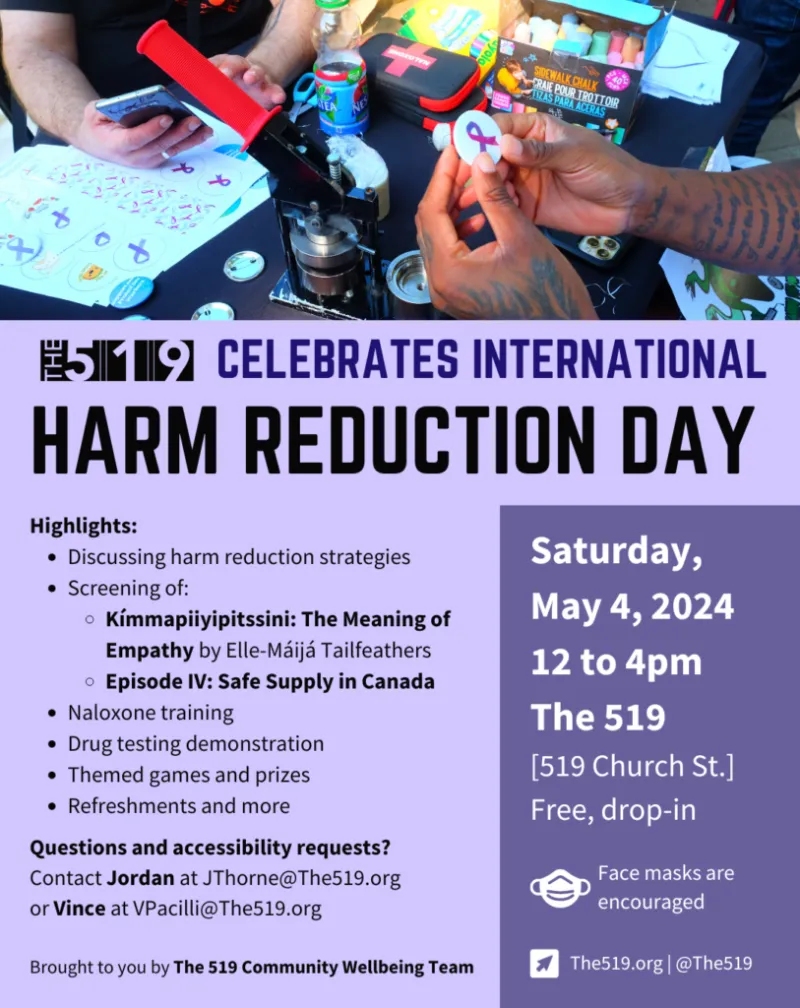
Photo: harm reduction volunteers event nightlife health table, via www.the519.org
There's a folding table near the back of a warehouse in East Oakland. It's draped in a black cloth, lit by a single LED strip, and stocked with things that have no business being at a party — if you believe the people who've never actually been to one. Naloxone kits. Fentanyl test strips. Reagent testing chemicals. A laminated sheet explaining what each color reaction means. Two volunteers in hi-vis vests who will answer your questions without judgment, no matter how many times you ask.
This is harm reduction in the underground. And it's spreading fast.
The Problem Nobody Official Wants to Talk About
Let's be real about something the mainstream conversation keeps dancing around: people use drugs at raves. They always have. From the MDMA-soaked warehouse parties of late-80s Chicago and Detroit to today's underground techno events in converted industrial spaces from Brooklyn to Phoenix, substance use has been woven into the culture — sometimes beautifully, sometimes tragically.
What's changed in the last five years is the risk calculus. The fentanyl contamination crisis, which began devastating opioid users, has crept into the stimulant supply with terrifying efficiency. Pills pressed to look like Molly or cocaine cut with fentanyl are showing up in markets that never had to worry about overdose risk before. People who had no opioid tolerance are dying at events, in parking lots, in Ubers on the way home.
The DEA issued warnings. Public health departments published advisories. And then, largely, official channels went quiet — because engaging meaningfully with harm reduction at illegal events means acknowledging those events exist. That's a political problem nobody in a government office wants to own.
So the scene owned it instead.
Grassroots, By Necessity
Organizations like DanceSafe — which has been operating since 1998 and remains one of the most recognized names in electronic music harm reduction — have seen a significant surge in volunteer applications and chapter formation over the past three years. Their model is peer-based: trained volunteers who are part of the scene staff information tables at events, providing drug checking services and education without law enforcement involvement.
But DanceSafe isn't alone anymore. Across the country, smaller, hyper-local collectives have emerged to fill gaps the national organizations can't always reach. In Chicago, groups operating under mutual aid frameworks have embedded harm reduction into the logistics of underground events the same way promoters think about sound systems and security. In New York, networks of trained volunteers circulate through the Brooklyn and Queens underground with kits that include everything from test strips to safe-sex supplies to mental health first aid resources.
"We stopped waiting for permission," says one harm reduction volunteer who asked to be identified only as Mara, and who works with a loose collective operating across Pacific Northwest events. "The people who would give us permission are the same people who would shut the party down. So we just show up and do the work."
The Legal Gray Zone
Here's where it gets complicated. Harm reduction at underground events operates in a legal environment that is, at best, ambiguous, and at worst, actively hostile.
Fentanyl test strips were classified as drug paraphernalia under federal law until relatively recently, and many states still maintain paraphernalia statutes that could theoretically be applied to the reagent kits used for pill testing. The events themselves are often unpermitted. Volunteers who provide drug checking services could, in some jurisdictions, face liability questions if something goes wrong.
And yet — the prosecutions aren't happening. Law enforcement, for the most part, has adopted a quiet, de facto tolerance for harm reduction work, even when it can't publicly endorse it. Some advocates believe this is pragmatic: arresting the person trying to prevent an overdose is a PR disaster that no DA's office wants. Others think it's more fragile than that — a tolerance that could evaporate with a single bad headline or a change in administration.
"We operate knowing that the ground could shift," says one promoter in the Southeast who has incorporated harm reduction services into their events for the past two years. "But we also operate knowing that if we don't do this, people die. That's not abstract. We've seen it."
What Actually Happens at a Testing Station
For people who've never encountered one of these setups, the process is less clinical than it sounds. A volunteer will walk you through placing a small sample of whatever you're planning to take onto a testing surface, applying a reagent, and reading the color reaction against a reference chart. Different reagents test for different substances — Marquis, Mecke, and Simon's reagents each react distinctively to MDMA, amphetamines, and opioids, among others. Fentanyl test strips require dissolving a small amount in water.
None of this is foolproof. Reagent testing can confirm the presence of certain substances but can't always detect low concentrations of adulterants or distinguish between closely related compounds. Volunteers are trained to communicate these limitations clearly. The goal isn't to give people a green light — it's to give them more information than they had before.
"We're not telling anyone what to do," Mara explains. "We're just making sure that whatever choice they make, they're making it with real information instead of vibes and hope."
Naloxone training is often part of the package, too. Volunteers demonstrate how to administer the opioid reversal medication, and many tables give away doses for free. In a world where a line of what someone thought was cocaine could contain a lethal dose of fentanyl, having naloxone on hand at a rave isn't paranoid — it's basic preparedness.
The Shift in How Promoters Think
Maybe the most significant change isn't the harm reduction infrastructure itself — it's the normalization of safety conversations among promoters who once avoided the subject entirely.
For years, the unspoken rule was that acknowledging drug use at your event created legal exposure. Promoters distanced themselves from the reality of what was happening on their floors. That calculus has flipped for a growing number of people in the underground. The reputational and human cost of a preventable death at your event now outweighs the theoretical liability of having a DanceSafe table in the corner.
"If someone dies at my party and I could have had resources there that might have helped, I have to live with that," says one promoter operating in the Texas underground. "The legal risk of a test kit feels a lot smaller than that."
This shift is also generational. Younger promoters who came up in the post-fentanyl crisis era have a different baseline expectation of what event safety looks like. For them, harm reduction isn't a radical political statement — it's just part of running a responsible event.
Where This Goes Next
Advocates are cautiously optimistic about the broader legal landscape. Several states have moved to decriminalize fentanyl test strips. Some cities have funded harm reduction programs that, while not explicitly rave-focused, create infrastructure that underground organizers can tap into. The cultural conversation around drug policy is more open than it's been in decades.
But nobody in this world is holding their breath for a top-down solution. The underground has always survived by building what it needs when the mainstream won't provide it — the music, the spaces, the community. Safety is just the latest thing the scene is building for itself.
That table in East Oakland will be at the next event, and the one after that. The volunteers will show up. The kits will be stocked. And the people on the floor will have a little more information, and maybe a little more time, than they would have had otherwise.
That's the underground keeping its own.